Strategy + Finance
for conservation.
↓

Nativa Capital Studio is a boutique studio for conservation strategy and finance.
We work with funds, NGOs, public agencies, and philanthropic organizations across the world, from project pre-feasibility to the design of the mechanisms that fund it, all the way through to the plan that measures its impact.
Services
1
Conservation strategies development
What to protect, in what order and on what assumptions. Prioritisation at system or landscape scale, built on the Conservation Standards.
2
Financial mechanisms development
Project Finance for Permanence, debt-for-nature swaps and performance-linked instruments. Mechanism and KPIs design, governance structure and the path to close.
3
Financial modelling for conservation
What it costs to sustain what you want to protect, what is already committed and what is missing. Funding gap, scenarios and long-term operating costs.
4
Monitoring plan development
What gets measured, by what method, how often and who verifies it. Biodiversity, management and financial performance indicators using Conservation Standards and best practices for MEL and/or MRV.
5
Theory of change development
What will change, why it should change and what has to be true for it to happen. For protected areas, programmes, portfolios and institutions.
6
Governance design and facilitation
Who needs to be at the table, on what standing and at what point. Design and facilitation of participatory processes between and among public agencies, communities, Indigenous peoples and private actors.
Us
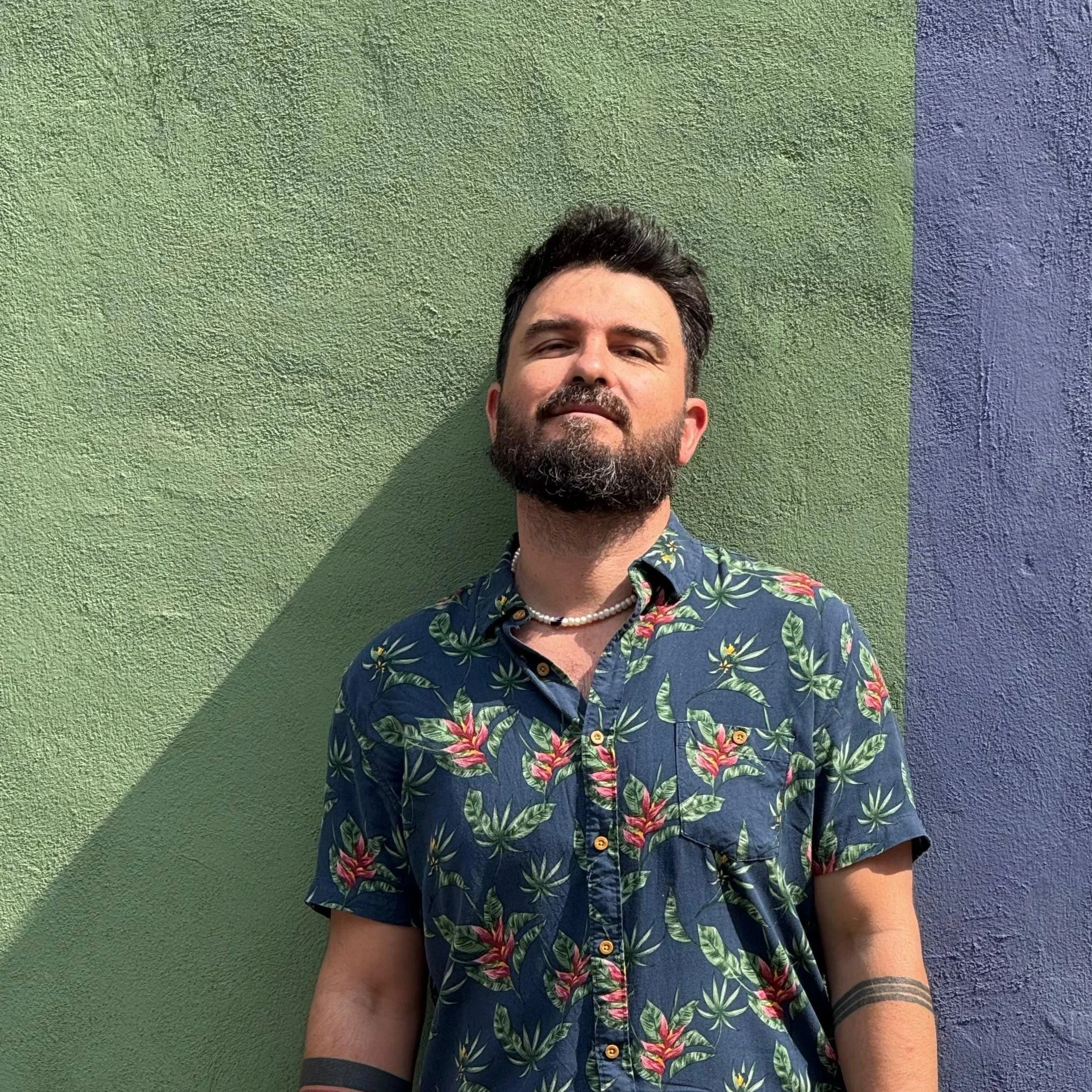
Nativa was founded by Maximiliano Sepúlveda.
Maximiliano (Max) has more than 25 years of experience in conservation. He holds a PhD in Veterinary Sciences from the University of Minnesota, as a Fulbright Fellow, an MSc from Universidad Austral de Chile, and a veterinary degree from Universidad de Chile.
Depending on the project, Nativa assembles a team as needed, bringing in thematic specialists matched to its subject and needs.
Before founding Nativa, Max worked at The Pew Charitable Trusts as a Senior Officer. He supported Project Finance for Permanence initiatives, a model of long-term financing for protected-area systems, in Chilean Patagonia, Panama and the Pantanal Gran Chaco, including the Indigenous territory of Charagua Iyambae in Bolivia. He also supported the design of the 30x30 KPI in Chile's sovereign sustainability-linked bond, the world's first linked to Target 3 of the Kunming-Montreal Global Biodiversity Framework. In addition, he supported the introduction of the IUCN Green List in Chile, the global standard for effectively managed protected areas, and the certification of its first site, Cerro Castillo National Park.
Before that, he led protected areas inside the Chilean state, as head of two departments at CONAF, Chile's national protected areas agency, and as acting head of its Protected Areas Division. There he set up one of the most recognized protected-area monitoring systems in Latin America, established Conservation Standards as the official planning tool, and designed a citizen participation framework. During the 2017 megafires, which burned 587,000 hectares in Chile, he led the rapid response in the protected areas system, and only 154 hectares were affected inside it. The analysis and preventive management tools developed then continue to be used today. As the government's counterpart, he also supported the creation of the Patagonian Parks Network, built on the largest private land donation to a country in history, and helped develop its cost model: Chile's first financial-gap estimation model for protected areas, still used by CONAF as its methodology.
-
Max began his career in field conservation through his veterinary thesis, using telemetry to study otters and understand the spatial requirements for their conservation. He went on to direct the huillín (southern river otter) conservation project at CODEFF, a national NGO, restoring otter ecosystems and protecting areas through public-private work across 1.5 million hectares in southern Chile, with local communities, forestry companies, ranchers and public agencies. He then built a research career. Through his MSc, PhD and a postdoc at Pontificia Universidad Católica de Chile, he worked on carnivore conservation. He discovered a population of Darwin's fox near Valdivia, at a time when only two populations were known and the species was classified as critically endangered, and he studied how infectious diseases move between domestic, invasive and native animals. That work gave him tools in epidemiology, statistics, modeling and ecology.
Let’s talk
If you have an idea for a conservation project, an existing one you need help with, or anything in-between, let’s talk!